
all that remains
all that remains, presented in association with Sakshi Gallery, brings together works by artists Kim Seola and Ankush Safaya, whose layered practices, while distinct, trace displacement, memory and spectral presence.
Kim Seola’s practice is deeply informed by the artist's experiences of witnessing the destruction of her hometown as a result of urban development. While Seola moved away, these memories lingered. These recollections resurface at various junctures, merging with images of other landscapes she has encountered—both coastal and arid. Her works bring to surface the residual matter left behind by microscopic life: worms, ashes, and microbes. These forms, chemical and organic, mark memories of loss and transformation.
Though not explicit, Ankush Safaya’s works stem from personal observations and a deep engagement with technology, literature and music. Rooted in memory, Safaya’s work traces both what is remembered and what is lost. These recollections unravel into a space of inquiry and introspection. Drawing cues from the personal, his visual language quietly amalgamates larger historical experiences of conflict, erasure and displacement. Here, text becomes trace, while memory is distilled through mark-making.
Both artists have developed distinct visual languages that dwell on trace, residue and memory. In their works, recollections are not narrated but quietly evoked through materiality and form.
Join us for a thought-provoking exhibition that opens at The Gallery@InKo Centre on Friday, 19 September 2025 at 6.00 p.m.
Featuring:
Ankush Safaya
Kim Seola
About The Artists:
Ankush Safaya
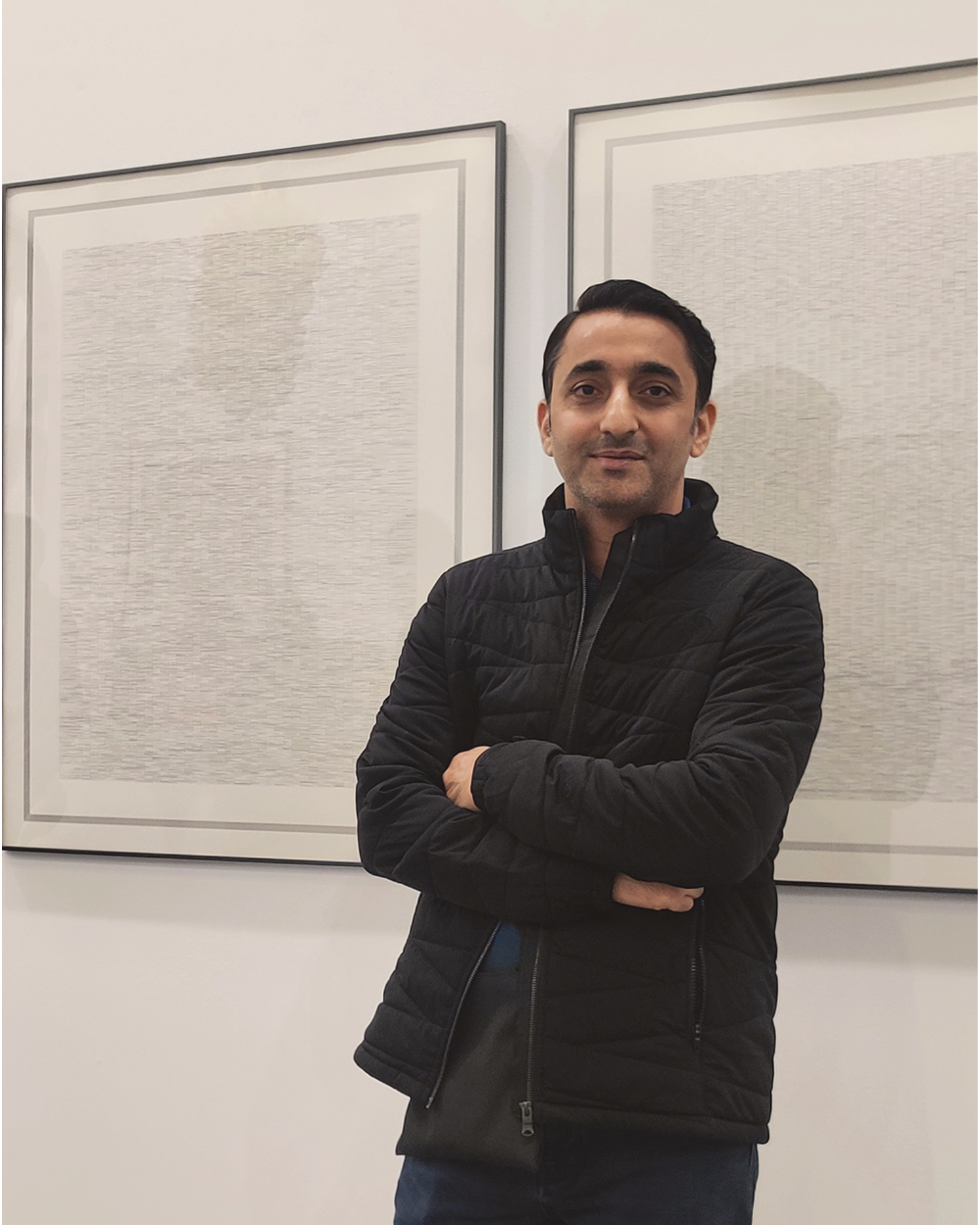
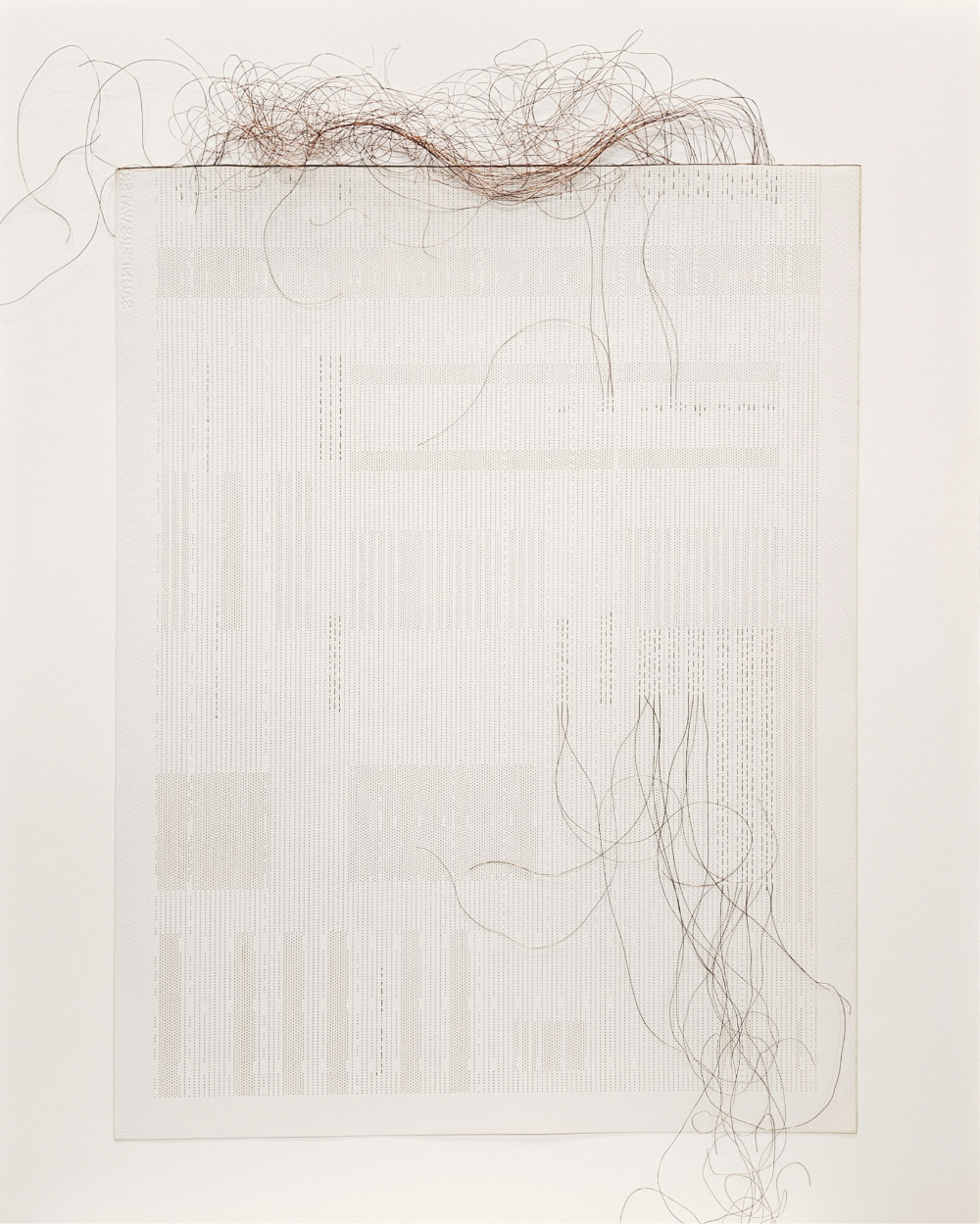
Born in 1985 in Hoshiarpur, Punjab, Safaya completed his studies in Engineering in 2007. He had his debut solo, Anantata – Hymns of Graphical Notation at Sakshi Gallery in 2019, followed by MEMORY TRACE / DAPAAN (…it is said) at Latitude 28 gallery, New Delhi, in collaboration with Sakshi Gallery, Mumbai, in 2023. He was previously part of group exhibitions such as Ufuq – Zarina a Tribute at Bajaj Kamalnayan Gallery, Mumbai, curated by Dr. Arshiya Lokhandwala; Four Conversations in the Room at Sakshi Salon, Mumbai, curated by Rekha Rodwittiya; The Sacred and the Profane at Sakshi Gallery, Mumbai, curated by Geetha Mehra; and Five for the Future at Nature Morte, Gurgaon in 2013.
He was awarded the Glenfiddich Emerging Artist of the Year 2013 (runner-up). He was invited as the first Artist-in-Residence by the Motwani Jadeja Foundation in New York in August 2019 and at ARE Holland as a resident artist in Enschede, Netherlands in April/May 2024.
Safaya currently resides and works at The Collective Studio Baroda, hosted by Rekha Rodwittiya & Surendran Nair.
Going out of the house, the student walked along the muddy road towards the open country. The air was full of a penetrating autumn dampness. The road was muddy, puddles gleamed here and there, and in the yellow fields autumn itself seemed looking out from the grass, dismal, decaying, dark. On the righthand side of the road was a vegetable-garden cleared of its crops and gloomylooking, with here and there sunflowers standing up in it with hanging heads already black. Excerpt from “Difficult People” by Anton Chekhov.
Things act as triggers for me – ideas that come from my reading and the music I listen to that create spaces of remembrance and memories revisited. It is from here that I gather a data-pool of connectives through which I reestablish and re-create for myself. Perhaps it’s a process of looking at myself - both from a perspective of deconstructing a past that holds the imprint of my belonging – as well as imagining via a process of re-assimilation a comprehension of life as I am living it.
All things are filtered from the conduit of politics I identify with that regards human life and the dignity of its preservation as important. The works in this exhibition come from texts that I extract from my readings – books that are mostly political and historical - and works of fiction from geographical territories which have narratives of the histories of conflict and turmoil. These texts create a journey back and forth in time, sometimes a sense of loss and sometimes a sense of connection. The texts I select from larger passages of writing undergo a series of transformations using Morse code as a method of rewriting them. I then inscribe these texts through varied ways– sometimes articulated via the carbon of graphite pencils making nuanced lines on the paper surface, or mechanism of burning the paper using laser which is fed by instructions via these codes which creates burnt marks on paper, or perforations on these layered sheets of gateway paper which become a metaphor to skin, or the rhythm of layered translucent papers that become a palimpsest that suggests the altered. Multiple layers of these codes then transform to become multiple layers of memory on each surface – like a landscape of floating musical rhythms.
I can best describe (because I find it difficult to put this into words) that there is an osmosis of learning that I arrive at through my work. It leads me to find methodologies of structuring language and choosing material. The optics of illusion that makes two dimensional lines appear to have movement or suggest a three-dimensional space – where the conjuring of a visual tactility seduces the eye. My work is about the conflict, as it is about the calm.
— Ankush Safaya
Kim Seola
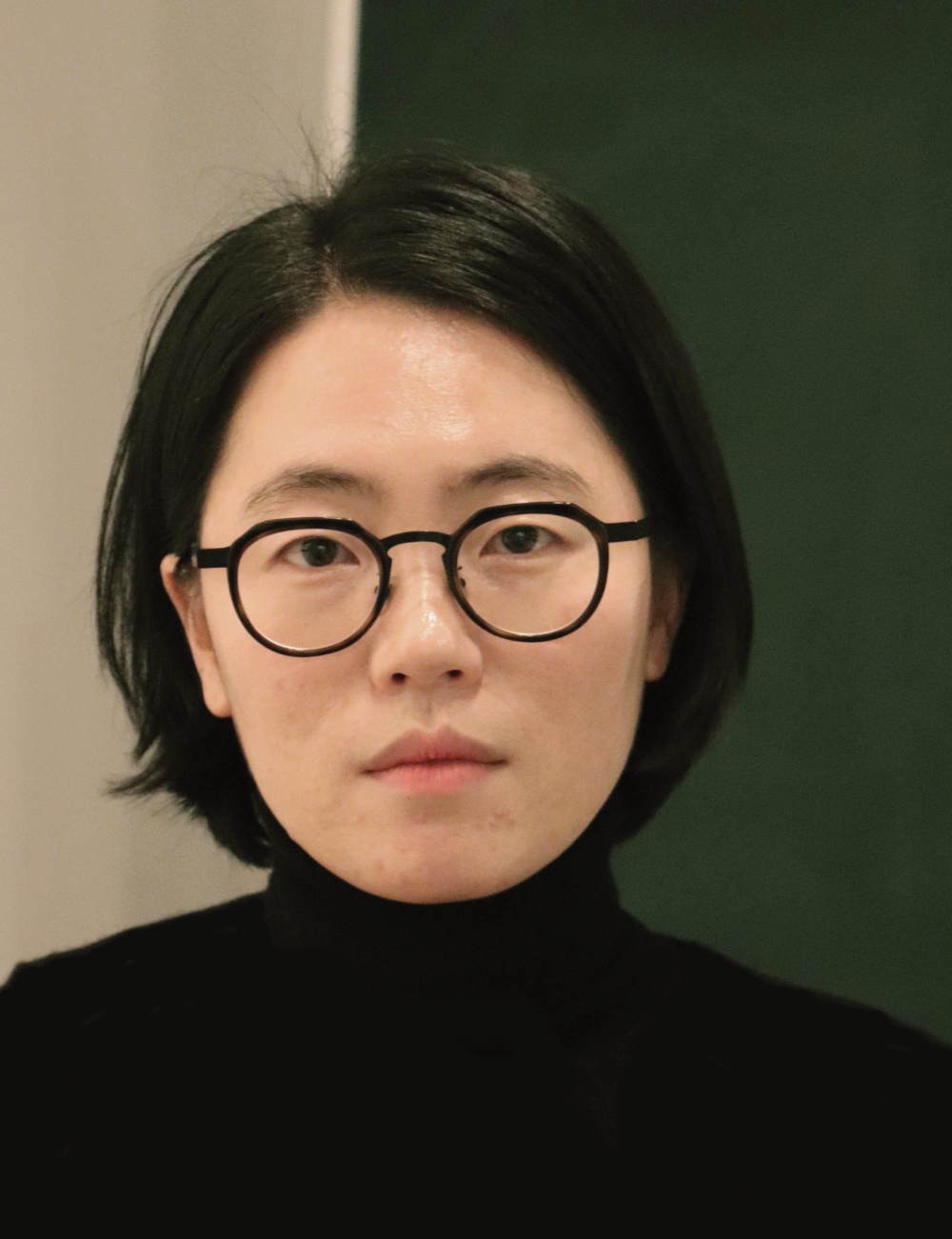
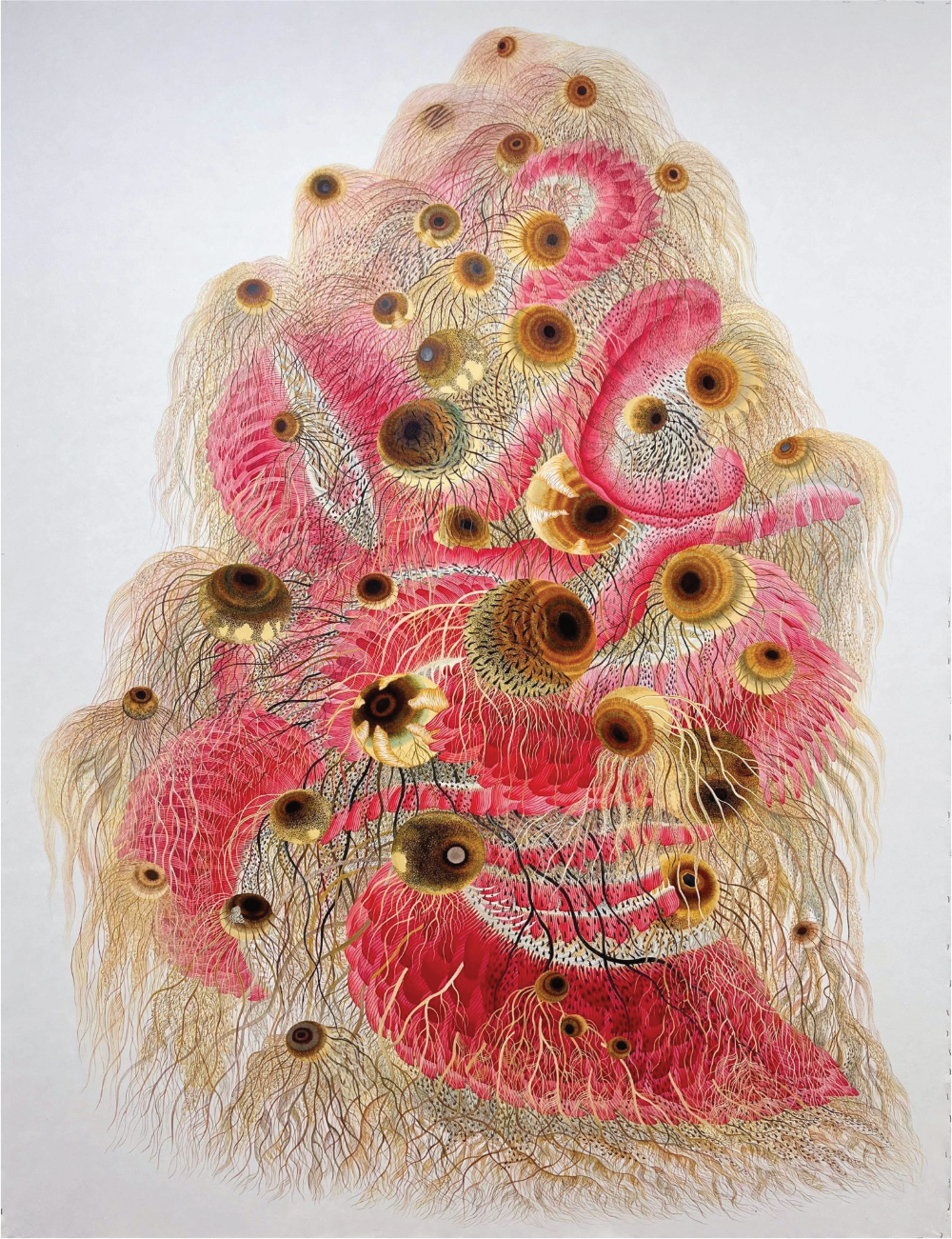
Kim Seola (b. 1983) traces her thoughts and observations through forms unseen to the naked eye. With her keen interest in small existences, she casts her gaze at lifeless things such as burnt remains of firewood. To the artist, they are regarded as life forms. She records loss and perishing of frail creatures that easily escape our recognition and visualises the lost time and memory of the past including dust, feathers, and unicellular organisms.
Seola’s art is also shaped by her experiences of studying and living in Vadodara, India for seven years. She completed her MFA at the MS University, Faculty of Fine Arts, in the Painting Department in 2011 and simultaneously, lived and worked at The Collective Studio Baroda where she received intensive tutelage from Rekha Rodwittiya and Surendran Nair. She returned to South Korea in 2014. Her work has since been included in important international exhibitions such as ‘The 11th Gwangju Biennale–The Eight Climate, What Does Art Do?’ at Gwangju Biennale, Gwangju and ‘Asia Contemporary Art Exhibition /Asia Women Artists’ at the Jeonbuk Museum of Art, Jeonbuk. She was also invited to participate in the Bank ART STUDIO NYK Residency in Yokohama in 2017 and in the Asia Culture Center / Arts Space Network Space Residency at ACC ASIAPLEX Studio, Gwangju in 2018.
The artist lives and works in Gwangju, South Korea
I have been exploring what an artist’s gaze should focus on and the source
of the power that directs it. To me, creating a painting is a way to record my
experiences and memories through ongoing communication with the subject.
As I observe, memories of my vanished hometown continually interact with it
in my deepest, innermost consciousness, becoming both recorded and
relived. After a large chemical industrial complex moved into my hometown,
where I was born and raised, I watched as it became polluted, gradually
transforming into something far detached from what it used to be, and
eventually abandoned by its residents. The memory of my hometown’s
destruction brought me intense suffering—the collapse of my origins, the
dissolution of my foundational sense of existence. This wasteland, weathered
by the painful passage of time, led me to question and search for a language
of my own. After leaving my hometown, I lived in various cities. One was near
a desert, where the arid landscape and scorching heat confronted me with
the thirsts of life. Another was by the coast, where I encountered posttsunami
apocalyptic scenery, embodied in the shapes of mold. The memory
of my devastated hometown resurfaced like déjà vu, appearing in different
landscapes, at different moments in time. I noticed distorted shapes, all of
which seemed interconnected, overlapping in their embodiment of death.
Amid this decay, I saw that the profound issues of our lives were intertwined
with darkness and fear, transforming into irretrievable feelings. My gaze
lingered on the tiny, fragile things left behind, where everyone else had
already gone—subtle existences drifting from place to place, detached from
their original forms. I paid close attention to the faint movements and sounds
of microscopic life—worms, ashes, microbes—through senses as sensitive as
tentacles.
In this way, I sought to summon my memories of those extinct spaces under the intensity of my deeply investigative gaze. This became my mission: to record the quivers of others, the unspoken sounds of witnesses to a precarious era, to remember those who lost their homes and continue to return in different forms, and to never stop reimagining them in these pervading, desolate places.
— Kim Seola
About Sakshi Gallery:

Founded in 1986, Sakshi Gallery has been at the forefront of India’s contemporary art scene. Located in the heart of Mumbai’s Colaba art district, the gallery is celebrated for promoting a diverse array of Indian and international art.
Over nearly four decades, Sakshi Gallery has showcased renowned Indian artists such as Jehangir Sabavala, Manjit Bawa, Rekha Rodwittiya, Surendran Nair, and Manjunath Kamath among others. The gallery is equally dedicated to nurturing the next generation of artists, offering a vital platform for emerging talents and fostering a dynamic and evolving artistic dialogue.
In addition to its focus on Indian art, Sakshi Gallery has exhibited several acclaimed international artists, including El Anatsui, Gregory Crewdson, and Julian Opie, bringing their groundbreaking works to Indian audiences.
Expanding its influence beyond India, Sakshi Gallery has curated exhibitions in major art capitals across the globe and actively participates in international art fairs, consistently shaping and enriching the contemporary art landscape.