
Imprints Film Festival
The Imprints Film Festival unfolds as a meeting ground for cinema, conversation, and performance. Presented by InKo Centre and mentored and produced by Rough Edges under the Uncode Fellowships, the Festival brings together filmmakers, artists, historians, practitioners and scholars to share films, engage in dialogue and reflect creatively on the many textures of gendered lives and experiences.
The Festival offers a specially curated set of films and stories that focus on poignant explorations of a range of complex and interconnected gendered experiences, celebrating the diversities of our beings, our individual and collective desires, resistances and solidarities, even as they engage with questions around film practice, the act of looking through the camera and finding and framing the everyday stories of women, trans and queer folks, often invisiblised, erased or homogenised.
The screening will be complemented with robust panel discussions and conversations, including some of the most prominent voices who engage with themes of cultural identity, the compulsion to belong in contemporary society, gender and sexuality and the challenge of redefining the boundaries of bonding, friendship and relationships.
Panellists:
Fowzia Fathima
V. Geetha
Uma Vangal
V. Prabakaran
Malini Jeevarathnam
Harish Subramanian
Dr. D. Punitha
Shalin Maria
Lawrence
Dr. Chitraa Venkey
The Festival includes a performance titled Naan Oru pen by Sowmiya to complement and counterpoint the screening and discussions. A thought-provoking presentation directed by A. Mangai that challenges stereotypes and encourages reflection and invites questions to push the conversation further forward.
Curated by
Uma Vangal, Ridhima Mehra and Tulika Srivastava
Curatorial note:
The lives, loves and longings of young and old alike are fascinating studies of human behaviour in
the face of loneliness,
disapproval of unconventional choices, the failure of relationships, and so on, and such stories
provide food for
thought, introspection and self-reflection. Some people go on to find happiness, friendship and
family - in all their
varied dimensions and definitions. Filmmakers often deal with the themes of cultural identity, the
compulsion to belong
in contemporary society, gender and sexuality and the challenges of bonding, friendship, forbidden
love, long buried
memories, unusual networks of care and friendships, and their need to document the ways in which
these social
phenomena collide, are created and are sustained from a driving force behind their work. The
dilemmas they face are
nothing compared to the challenges and trials, the experiences, the battles, the
successes/failures, and the lives of the
people about whom these films are made. Amidst such dilemmas, the Uncode Fellowships (2022–2024)
were an
initiative of Rough Edges to mentor filmmakers (both aspiring and established) of varied genders
and across locations.
And what's more, they produced these films. They supported the filmmakers as they grappled with
the subjects,
themes and treatments and worked on capturing and sharing their lived experiences through filmic
narratives. The
result - 10 documentary films - as interesting and diverse as their makers - each offering
glimpses of people who found
their way through different struggles and challenges. imprints by Rough Edges is a different film
festival that brings this
package of personal films and hopes to leave some imprints not just on our visual aesthetics and
cinematic sensibilities
but also on the minds of the participants. It was a journey of discovery and introspection for me
watching these films
and finding the intersecting lines of emotions, experiences and explorations that created a
seamless connection across
all the protagonists and their journeys. As a filmmaker who grapples with these very challenges of
representation, it
felt personal and productive. It gives me immense joy to put this festival together and showcase
these films and
filmmakers to the Chennai audience.
-Uma Vangal
Naan oru pen:
Naan oru pen - Theatrical performance by Ms Sowmiya, Directed by Mangai.
Taking on from Maya Angelou’s Phenomenal Woman and Still I Rise, this solo performance presents an embodied narration of un-making the body, lived experience and resilience of queerness, especially of a trans – life in India. This is our tribute to Maya Angelou and her life that stood for intersectionality of race, class, gender, sexuality, civil rights and environmental justice. ‘Out of the huts of history’s shame’ this woman rises armed with the ancestral gifts. She comes knowing herself, knowing the need for dignity and self-care.
The skin of our body, desires, pains, our dress and accessories bundle us up in multiple ways.
When we can ‘unmake’ these layers and be ourselves, we ‘live’. We stage this ‘return to home’;
we wish to recognise our nurturing nests; no one is ever by oneself on this earth.
- A. Mangai, Director, Naan oru pen
Sowmiya
Sowmiya is a theatre artist with over 15 years of experience on stage. She works with Kattiyakkari and Marappachi theatre groups. From her debut in Bama’s short story Molagapodi adapted for stage by Srijith Sundaram, she has performed Manto’s Shame, Manjal – a play that dealt with the plight of manual scavengers, Nooramma Biriyani Darbar to mention a few. Theatre has helped her travel to many cities in India. Even during the lockdown, it was the online performance of One Can Only Laugh that kept her spirits together. She did the lead role in Marappachi’s Stree Parvam in 2024 and opened Naan Oru Pen, based on Maya Angelou’s poems ‘Still I rise’ and ‘Phenomenal Woman’ for the Chennai Pride - 2024. She considers her experiences of being part of the Trans Kitchen during the pandemic transformative. She has a vibrant tic-tok and Reels presence and has also been part of feature and short films.
Mangai
A. Mangai is the pseudonym of Dr. V. Padma. She retired as Associate Professor in English from Stella Maris College, Chennai. She has been actively engaged in Tamil theatre as an actor, director and playwright for almost four decades, through which she has directed over forty plays, all of which deal with women–centred themes and characters. She hopes that her academic, activist and artistic selves can find a vibrant intersection. A bilingual writer, her fields of interest are theatre, gender and translation studies. Her Kaala Kanavu (A Dream of Time) is a docu- drama on the feminist history of Tamil Nadu scripted by the feminist historian V. Geetha. She is also interested in classical Tamil literature from a contemporary perspective of gender, ecology and culture. To make theatre the voice of the voiceless, the marginalised, is her passion. She has evolved eight plays with the Suriya Women’s Cultural Group in Batticaloa, Sri Lanka, while her work with the transgender community over the past two decades has helped form Kannadi Kalai Kuzhu. Her Acting Up: Gender and Theatre in India 1979 Onwards has been published by LeftWord, New Delhi. She has also translated Sudhanva Deshpande’s Halla Bol, a memoir of Safdar Hashmi into Tamil. Her most recent translation is Volga to Ganges in Tamil for a people's edition.
About the Film and flimmakers:
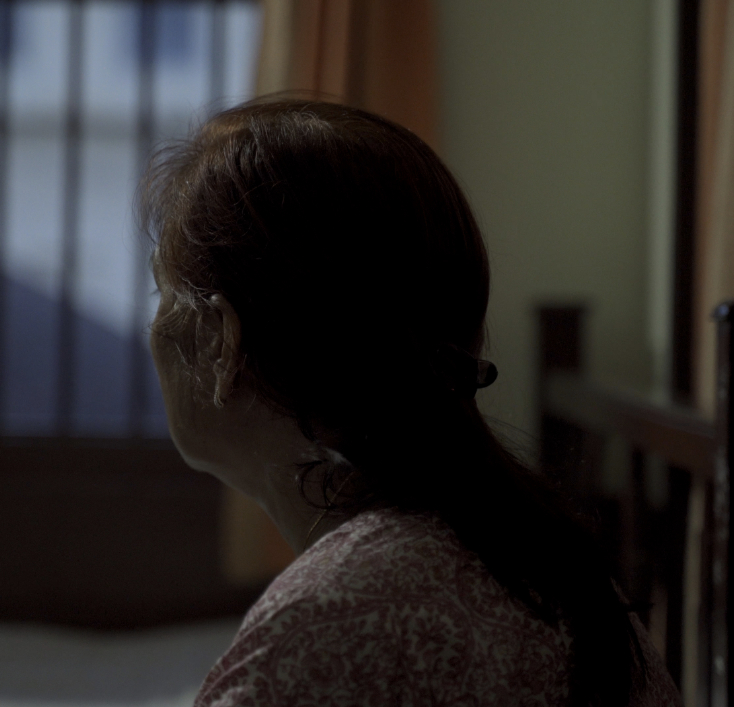
ALL THAT
WE OWN (SAB KUCHH APNA)
APRAJITA GUPTA
30 min | Hindi with English Subtitles | 2024
She recalls the memory of her first home in Nagaland, each memory a lingering echo of displacement. Is visiting her homeland a moment of rootedness or a reminder that belonging remains elusive?
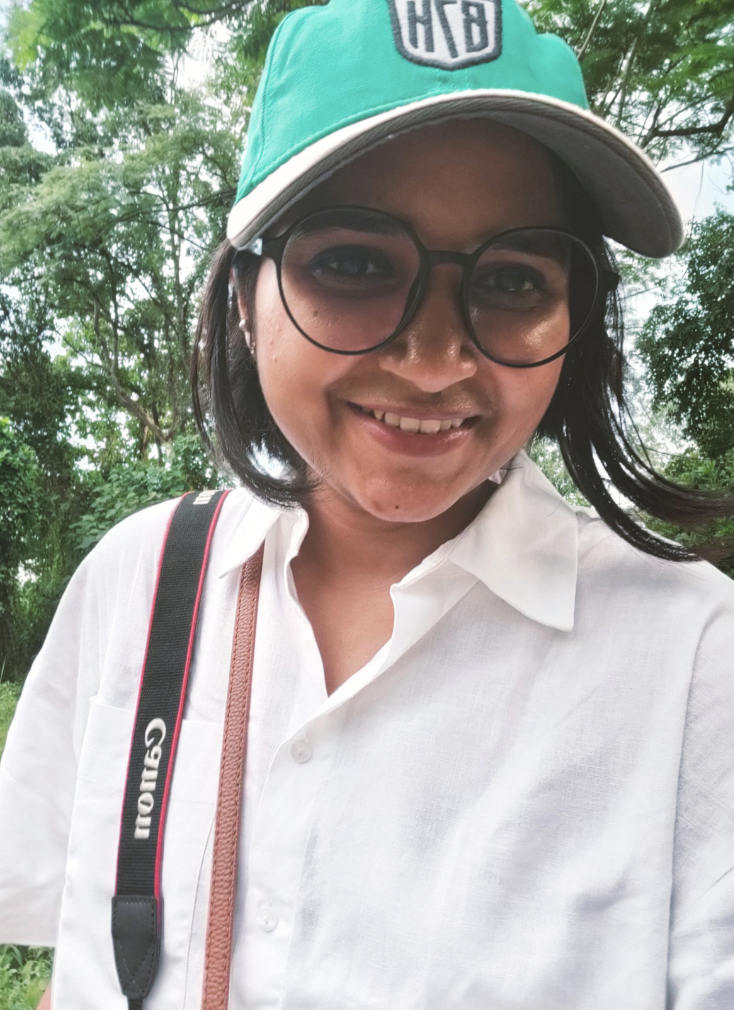
Aprajita
Aprajita is an independent filmmaker and artist driven by her curiosity for novel artistic expressions. Her narratives explore themes of gender, urban and rural migration and technology. The core of her practice draws inspiration from lived experiences and the resilience of people navigating through their lives. Growing up in a small town in Uttar Pradesh, she deeply reflects on personal narratives and takes a keen interest in the nuances of home and belonging. Her student film Jaagte Khwaab explores the theme of identity and sexuality, screened at the Dharamshala International Film Festival, 2023.
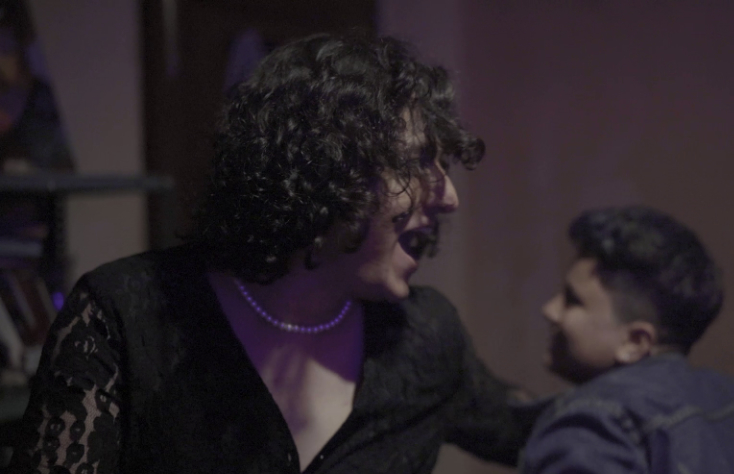
B25
RAQEEB AND MANVENDRA
34 min | Hindi and English with English Subtitles | 2024
Inside the walls of B25 is a sanctuary where lives intersect, stories intertwine and people flourish. The film offers glimpses of these unconventional bonds and experiences, that reframe notions of home and belonging, while reflecting on queerness, love, chosen families, gender, violence, identity and freedom, against the backdrop of a rapidly changing India.
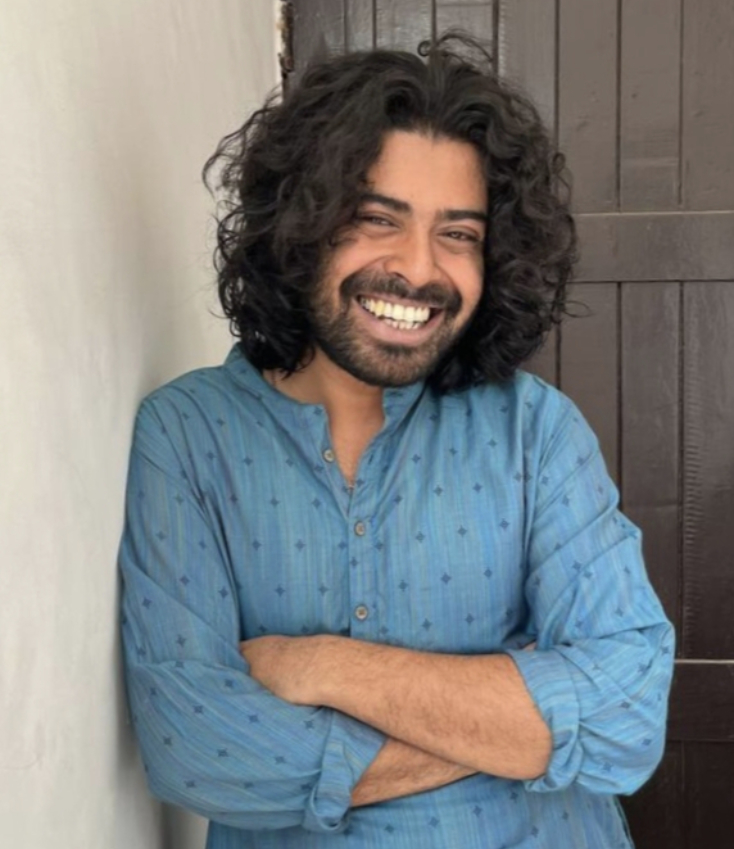
Raqeeb
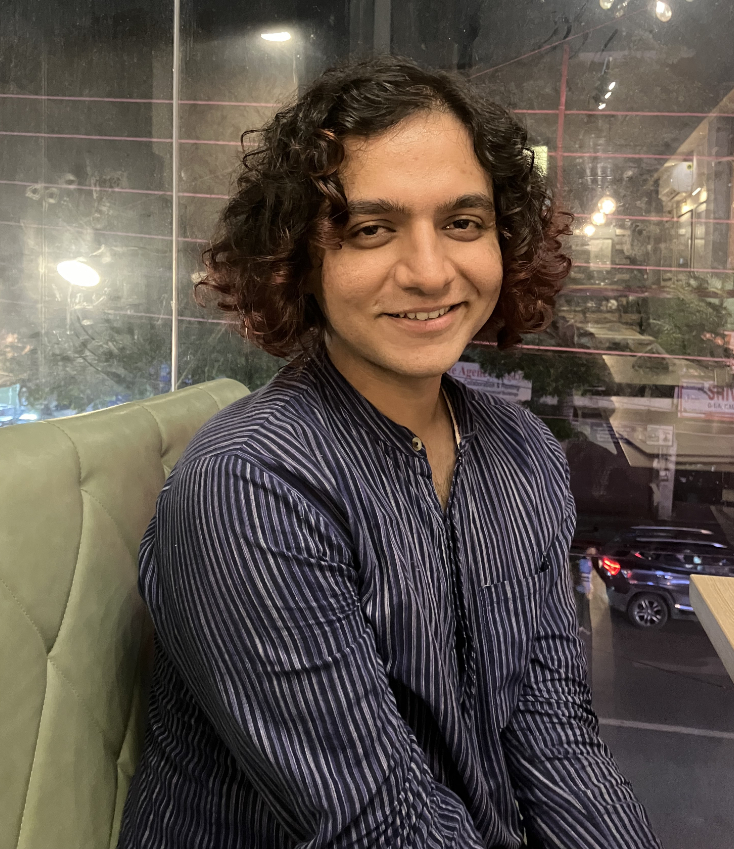
Raqeeb is a writer, photographer, filmmaker and researcher from Kolkata, based in Delhi, whose work revolves around redefining masculinity in the Indian context, with a focus on queer intimacies and identities. Nominated twice as the LGBTQIA+ Voice of the Year at the Cosmo India Blogger Awards, he is currently pursuing his PhD on queerness, films and family. Raqeeb has exhibited his photographic work at several platforms, including Kala Ghoda Arts Festival, Mumbai, and Khoj Studios, Delhi.
Manvendra
Manvendra/ Noor is a queer artist, researcher and performer pursuing a PhD in Literature with a specialisation in Intermedial Studies at the Université de Montréal. With a background in Performance Studies from Ambedkar University, Delhi, their work explores the intersections of performance, archives, language and social inquiry, focusing on queerness and home-making. They engage with both real-time performance and virtual archives as ways of documenting and reimagining belonging. Beyond performance, Manvendra writes, draws and works with languages, as part of their academic and artistic practice. Influenced by migration and spatial belonging, their work is rooted in everyday experiences and artistic research.
HUMARE BEECH MEIN
(IN BETWEEN US)
RAJKUMARI PRAJAPATI AND RUCHIKA NEGI
35 minutes | Hindi with English subtitles | 2023
A conversation between two women about making a film on caste. How does one show the ordinary, viscerally? How do you use the camera to reveal structures of power and, maybe, even take back some power for ourselves? How does image-making help us negotiate, question and reflect on our differences? And as documentarians, how do we film caste? What do we show? What do we hide? Who has access? Who refrains? Shot on mobile-phone cameras in western Uttar Pradesh, the film seeks to explore the positions of the two women, Rajkumari, a social activist from Lalitpur UP, and Ruchika, a documentary filmmaker and educator from New Delhi, within the stratified structure of caste.
Ruchika
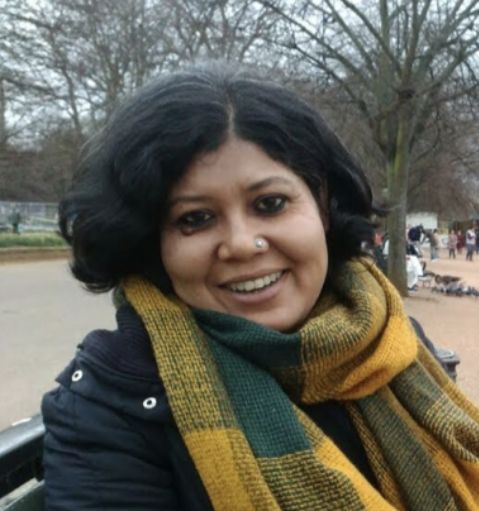
Ruchika Negi is a filmmaker, educator, and visual artist with an interest in arts-based pedagogical “practices.” Some of her films include Malegaon Times, Every Time You Tell a Story and Two Autumns in Wyszogrod. She has been awarded artistic residencies at the Centre for Contemporary Art, Warsaw; PAV Centre for Contemporary Art, Turin and Khoj Studios, Delhi. She is also a recipient of the Charles Wallace Short Term Grant and a Research and Documentation grant from the India Foundation for the Arts. Her works have been exhibited at various Festivals and art platforms, the most recent being the Kochi Muziris Biennale. She has been teaching documentary cinema in various universities and informal spaces and currently leads the Learning Lab, an arts-based pedagogical platform of the feminist think tank, The Third Eye.

Rajkumari
Rajkumari Prajapati is a social activist embedded in the grassroots women's collective, Sahjani Shiksha Kendra, in western Uttar Pradesh, for over two decades. She is also a part of the feminist think tank, The Third Eye's Learning Lab, an arts based pedagogical platform. She was one of the filmmakers in the collaborative film project, Raat (Night time in small time India), that has travelled to various national and international film Festivals, university fora and cultural Festivals since its release and won the Gender Sensitivity Award at the Dharamshala International Film Festival.
LOG KYA KAHENGE |
WHAT WILL PEOPLE SAY
RAFINA KHATUN
40 min | Hindi, Gujarati with English Subtitles | 2024
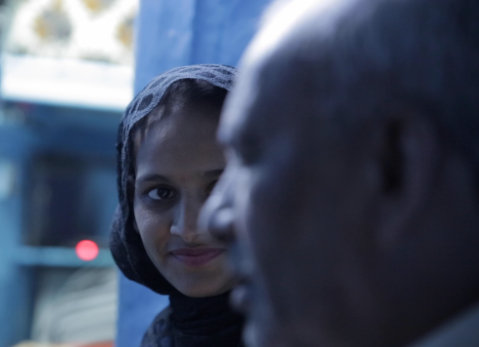
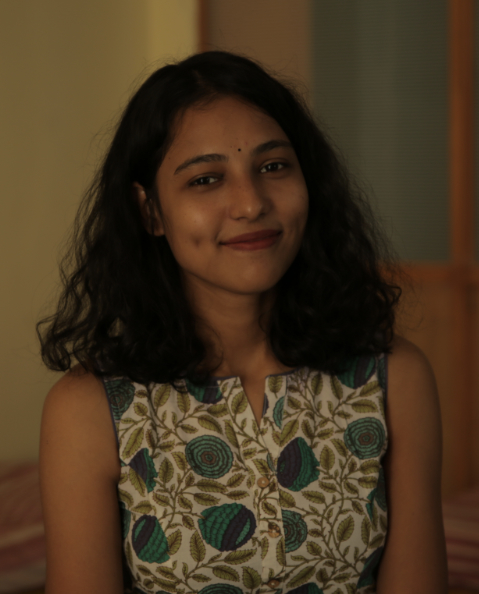
Gulnaaz remains committed to using community radio to shed light on injustices and oppressions faced by marginalised communities, despite constant scrutiny and control by her family and community. Through her empathetic storytelling, she brings attention to untold narratives and advocates for unity and harmony. Amidst her fight for social change, Gulnaaz grapples with her own struggles for freedom and autonomy. This is the story of a young Muslim woman dreaming differently in a patriarchal society determined to silence her.
Rafina
Rafina Khatun is a filmmaker and editor, dedicated to amplifying the voices of women through her work. With a degree in Journalism and Mass Communication from Calcutta University, she has honed her skills by assisting renowned filmmakers like Debalina, Susmita Sinha, Sankhajit Biswas, Farha Khatun and Baudhyan Mukherji on various documentary and fiction projects. In 2021, Rafina was awarded the prestigious Third Eye Fellowship from Nirantar Trust, which enabled her to create her debut film A Journey to Home, which intimately explores the unfulfilled dreams of her family members. She has worked with Drishti in Ahmedabad, where she edited films and actively participated in community skill training programmes. Currently, she is pursuing Editing at SRFTI.

MAKING SPACE
NIKITA PARIKH
14 min | Hindi with English Subtitles | 2024
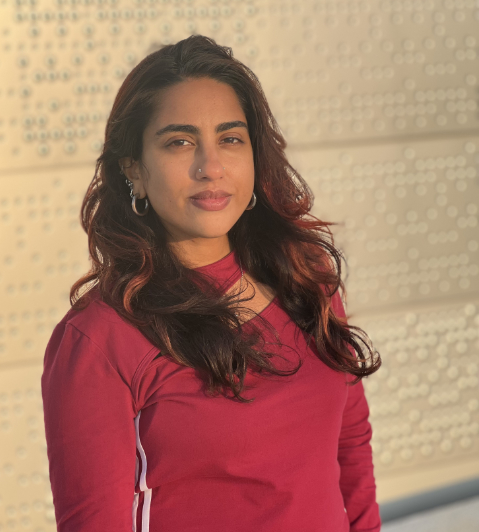
Alsana lives in a small, chaotic neighbourhood in Ahmedabad, cut off from the rest of the city by an 85 acre landfill on one side and a highway on the other. A room of one’s own is hard to come by, but Alsana has a corner where only her rules apply. It takes on different forms - each an expression of her inner life, at odds with the world. Meanwhile, Alsana’s drawings show signs of the society seeping in, as she grapples with her identity and conflicts closer to home.
Nikita
Nikita Parikh came to filmmaking through working with children. She traveled to classrooms across the country making videos for Teach for India, an NGO which works in government and low-income private schools. During her Master’s degree in Education at the Tata Institute of Social Sciences, Mumbai, she started researching and using participatory media with teenagers. She is driven by creating films which promote understanding, empathy and change.
PARI
PRIYA SEN
31 minutes | Hindi with English subtitles | 2023
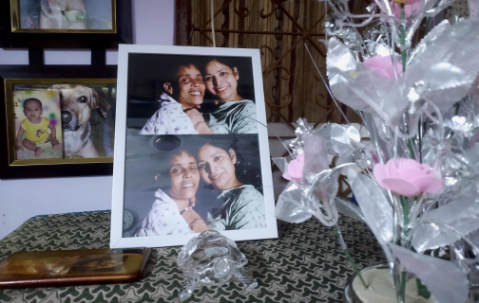
Pari attempts to describe an event in the days of Pari and Praveen, a violent rupture that allowed in a life held by desire and not duty. In this film, they recount their love story against the undertones and backdrop of threat and violence. The present is both fraught and romantic; the disruption of a past moment finds momentary comfort in recall; the future is hopeful.

Priya
Priya Sen is an independent filmmaker and artist who works across film and video, sound, and installation. Her work explores forms for tenuousness and ambiguity within realist documentary and simultaneously plays with narrative modes and cinematic gestures. She is interested in eclectic, itinerant and egalitarian film forms and the manners of presence that accompany each work. With an MA from Jamia Millia Islamia, Delhi, and an MFA from Temple University, Philadelphia, Sen has taught and facilitated nonfiction and experimental film and video practice in various institutions and social contexts. Her films have screened at Festivals and venues that include Forum Expanded Berlinale, BFI London Film Festival, Dharamshala International Film Festival, IDSFFK Kerala, Outfest LA, Bangalore Queer Film Festival, Kochi Biennale, Experimenta, and IAWRT among others. She was a 2023-24 Radcliffe Fellow at the Harvard Radcliffe Institute.
UMBRO | THE
THRESHOLD
PRACHEE BAJANIA
34 min | Gujarati and Hindi with English Subtitles | 2024
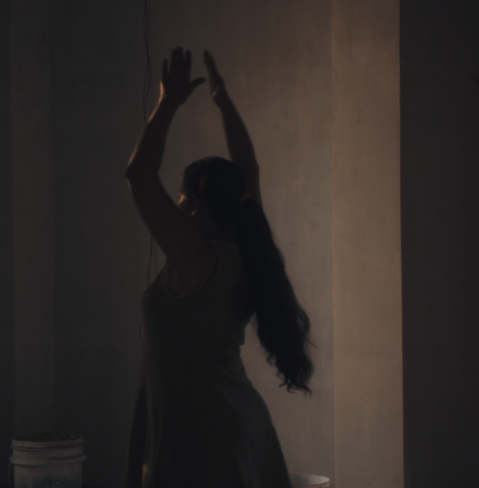
Umbro, the threshold of a home, is the liminal space that speaks to the lives of women, including the filmmaker's mother and her friends who live in the small town of Dhrangadhra in central Gujarat, India. The film explores joyful friendships among women, often dismissed and unsung, carrying in them moments of shared stories, solidarities, conflicts and, most of all, routine acts of resistance. Umbro attempts to locate these flights of desire in the everyday, while celebrating the women’s indomitable love for life and each other
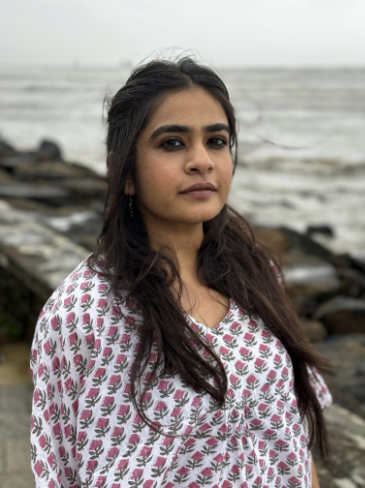
Prachee
Prachee Bajania is a filmmaker, editor and writer based in Gujarat. An alumna of the National Institute of Design, Ahmedabad, and the Film and Television Institute of India, Pune, Prachee has been making films since 2011. Her interest in history, poetry, life sciences, and the ordinary influences her film work. Her film Umbro (The Threshold) won the ReelFocus Award for Best Documentary at the 14th Beijing International Film Festival and Second Best Film, Short Documentary at the 16th International Documentary and Short Film Festival of Kerala, 2024. Prachee’s films have been shown at many national and international film festivals and institutions.
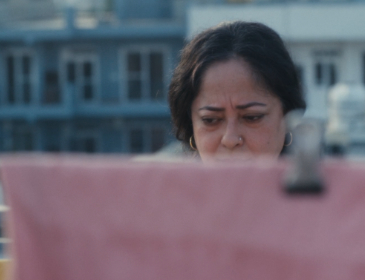
WARM SHADOWS
AAKASH CHHABRA
15 minutes | Punjabi, Hindi with English subtitles | 2024
Priya, 50, makes her maiden trip to the sea. At dusk, she stands at the shore and overlooks the vast horizon. In a distant part of the world, Raag, 20s, is in a taxi which passes the Busan metropolitan area. A fragmented voice-over unfolds the fractured yet tender relationship the two share with each other. Raag asks her why she let her in-laws change her name. Priya responds that there wasn’t much of a choice given to her. In a scene from the past, Raag takes Priya’s pictures while she’s washing clothes. They head to the rooftop to spread out clothes for drying where Priya confronts Raag about his sexual orientation. Raag feels taken back. He averts her gaze and in doing so ends up coming out to each other. Later in the day, Raag realises that Priya was coming out to him instead. At the beach, Priya lets the ocean swallow her. Raag reaches home and reflects upon his mother’s happy marriage.
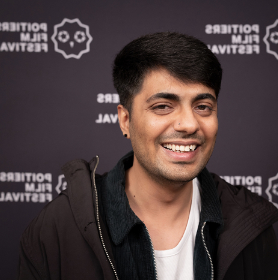
Aakash
Aakash Chhabra is a writer and director based in Panipat, India. He is an alumnus of the Red Sea Director's Program 2025, CHANEL X BIFF Asian Film Academy 2024 - Motion Picture Association Award, Busan Asian Film School (AFiS) 2022 - Best Project Award, Satyajit Ray Film & Television Institute 2020 and Locarno Documentary Summer School 2019.
His shorts have screened at festivals in Busan, Winterthur, Poitiers, Tehran, Kerala, Oberhausen and Dharamshala. His debut short MINTGUMRI (2021) was nominated for the FCG Critics’ Choice Awards 2022 while his short documentary A WINTER’S ELEGY (2022) featured on the Sight and Sound Magazine’s list of Best Video Essays 2022. ERRANDS (2024) was produced by the Busan International Film Festival while WARM SHADOWS (2025) will premiere later this year on Nowness.
He is presently working on his feature-length debut I’LL SMILE IN SEPTEMBER which was developed at the Torino Film Lab - Red Sea Lodge 2024, Autumn Meeting 2024 and Produire au Sud Nantes 2022. It has participated in the Asian Project Market 2023, NFDC Film Bazaar 2024 QCinema Project Market 2024 and Red Sea Souk 2024. He is a recipient of the reFrame Genderalities film fellowship 2021-22 and the Rough Edges Uncode Fellowship 2022-23.
About Rough Edges:

Rough Edges facilitates multidisciplinary feminist cultural research, knowledge production, narrative building, archiving and education through creative documentary films and storytelling by women, trans, and queer artists. The initiative is grounded in a commitment to intersectional gender justice, solidarity and affirmative social change.
Rough Edges enables, mentors, produces and disseminates imaginative documentary films on gendered lives and living, exploring diverse, intersecting and complex realities. Through the making and sharing of films, the initiative engages deeply with intention, perspective, process, form and expression and with how these resonate within a structurally intricate and unequal world.
About Uma Vangal:
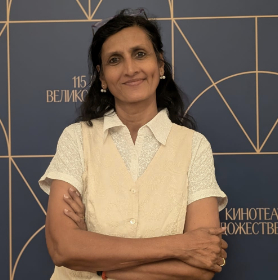
Uma Vangal teaches film writing, film production, film studies, journalism and media studies in India and the US. Currently a professor at the International Institute of Film and Culture, Chennai where she teaches narratology, Popular Culture and Film and supervises scripts. As an adjunct faculty member at the Asian College of Journalism in Chennai, she teaches courses on cinema and culture. As a visiting professor if film and affiliated scholar at the Department of dance, drama and film, Kenyon College, Ohio, she has taught Community engaged learning film courses and works on Documentary films. Her area of specialisation is Gender and Film, Women and media and Film appreciation.
A two time Fulbright scholar, she taught at Kenyon College, Ohio, she has taught Indian popular cinema, Women in Film in South Asia, the Documentary, writing the short fiction film, and Directing for Camera.
Her documentary journey began with I am Akku, She is Leela a film on the fight by two Dalit women for their rightful compensation from the Karnataka government that was instrumental in winning them the case in the Supreme Court.
Her historical docu A saga of excellence to celebrate the sesquicentennial year of the University of Madras was released by then President Shri Abdul Kalam and received by the then Chief Minister M Karunanidhi.
Her most recent film In God we trust is an outsider's inside view of an Amish family in Ohio and was screened extensively in the US and India as part of the Reverse Gaze project of the 75th year Fulbright Foundation celebration. An ethnographic film, it was the official selection at the Amsterdam Global Lift off Film Festival, The LA independent Women's film festival awards, nominated at the Faith in Film Festival, and featured in the Montage section of the 2nd Eikoigi International Film Festival, Manipur.
The Fitmus test formulated by her has been presented at TedX talk and is being used by many doctoral scholars to study films.
She is currently editing 2 of her documentary films and researching the global gaze and the representation of South Asian women on screen.
About Ridhima Mehra and Tulika Srivastava:


Rough Edges is the an initiative of Ridhima Mehra and Tulika Srivastava, who together bring over twenty-five years of experience at the intersection of documentary filmmaking and social change. Their work draws on an extensive engagement with the Public Service Broadcasting Trust, where they led the commissioning, creative realisation and outreach of more than 700 documentary films spanning diverse artistic forms, subjects and voices.
These films have travelled widely across the world, with over 2,000 festival selections and 350 awards, including thirty National Film Awards, as well as screenings and honours at major international platforms such as the Oscars, Berlinale, Rotterdam, Oberhausen, Yamagata, Busan and Sheffield. Many of these works continue to be actively used in local, national and international contexts for advocacy and dialogue. Ridhima and Tulika also curated films, conversations, exhibitions and documentary trainings for fourteen editions of the annual international documentary festival, Open Frame, fostering critical reflection on multiple lived realities.
In recent years, their work has expanded to commissioning and mentoring genderfocused projects across a range of media, including performance, graphic narratives, mixed-media works, podcasts and installations. They have also curated creative training resources on gender-based violence and served as jurors at film festivals.
Their practice is informed by a deep belief in collective energies and shared vision that inspire, sustain and activate independent creative and cinematic work, as well as its dissemination and advocacy. Rough Edges is supported by an Advisory Team of diverse and experienced feminist activists, artists and practitioners, who help shape and guide its creative, philosophical, political and institutional directions—enriching perspectives and strengthening the initiative’s work.
Imprints Film Festival Schedule:
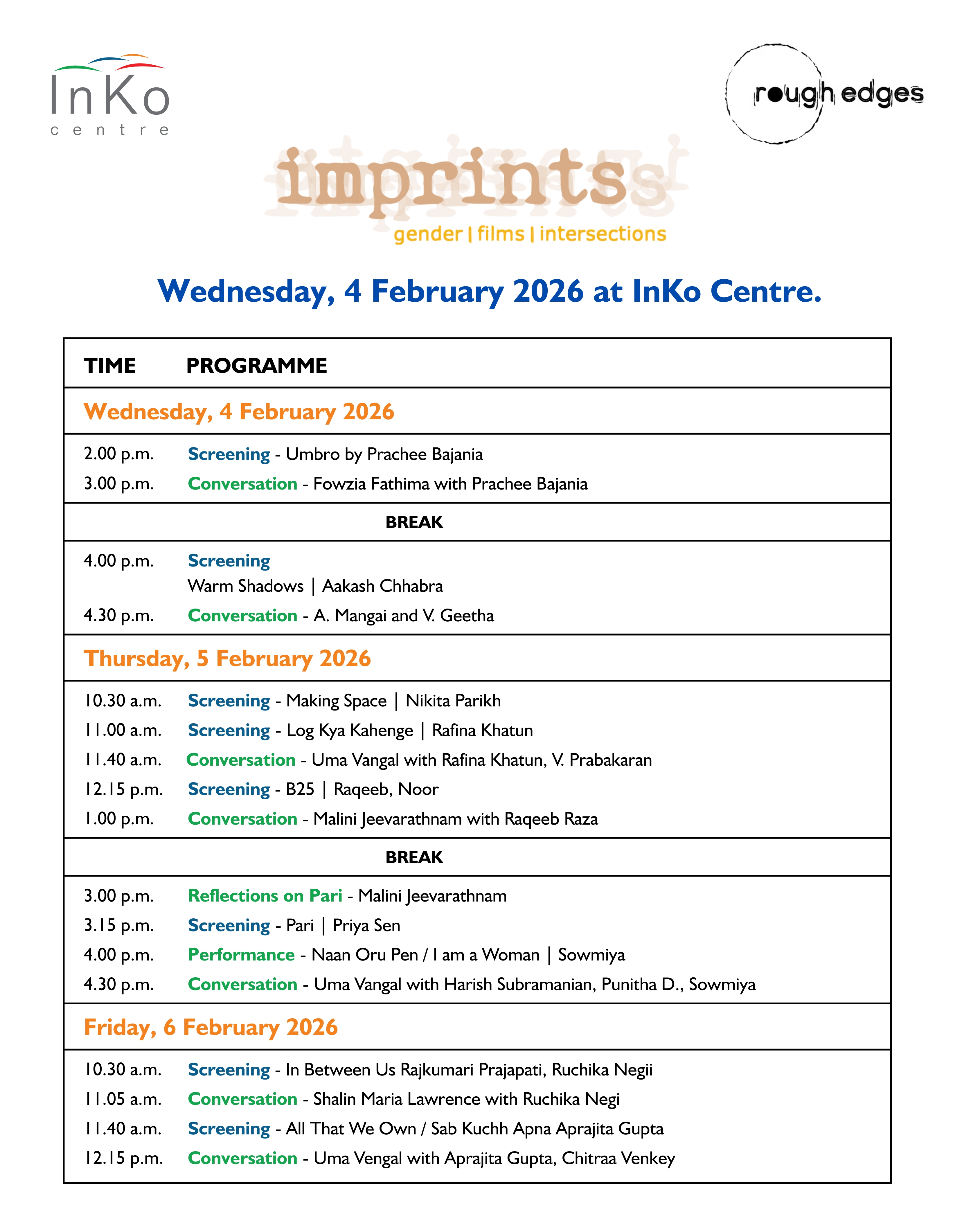
Wednesday, 4 February 2026 to Friday, 6 February 2026 at InKo Centre.
Entrance is free. Registration required. Seating will be on a
first-come, first-served basis.
To register please visit: https://forms.gle/i5J11mAyTXQnujHK9
For further information, please contact InKo Centre - T: 044 24361224; E: enquiries@inkocentre.org